

Last updated: October 27, 2026
A slow drain always picks the worst moment — right before guests arrive, or mid-shower when you're standing in an ankle-deep puddle. Before you reach for that bottle of chemical drain cleaner, know this: those products are brutal on your pipes, terrible for the environment, and honestly not even that effective on real clogs. Here's how to unclog a drain naturally with stuff you probably already own.
I've cleared every drain in my house with these methods — the plunger-and-baking-soda combo alone has saved me hundreds in plumber callouts, right up there with learning to fix a dripping faucet yourself.
Why Skip the Chemical Drain Cleaners?
Quick detour, because this matters:
- They damage pipes. Lye or bleach strong enough to generate heat — heat that warps PVC and corrodes older metal pipes over time.
- They're dangerous to you. Splashes cause chemical burns, fumes irritate lungs, and mixing products can create toxic gas.
- They often don't work. They dissolve some organic gunk but can't touch the real culprit in most clogs: a solid mass of hair and soap scum.
Natural methods are cheaper, safer, and — for the common clogs — just as effective.
Method 1: The Baking Soda + Vinegar Flush (Start Here)
This handles slow drains and mild clogs. It's the first thing to try, always.
- Boil a kettle of water and pour it slowly down the drain. This melts soap scum and loosens grease.
- Pour 1/2 cup of baking soda directly into the drain. Try to get it down the drain, not piled around it.
- Follow with 1/2 cup of white vinegar. It'll fizz — that's the reaction working, not just for show.
- Cover the drain with a plug or damp cloth for 15–20 minutes. This keeps the fizzing action focused downward instead of escaping up.
- Flush with another kettle of boiling water.
For maintenance, do this once a month even when drains seem fine — and for the rest of the house, these DIY natural cleaning products actually work.
One caution: on old PVC pipes, use very hot tap water instead of boiling — ancient plumbing deserves gentleness.
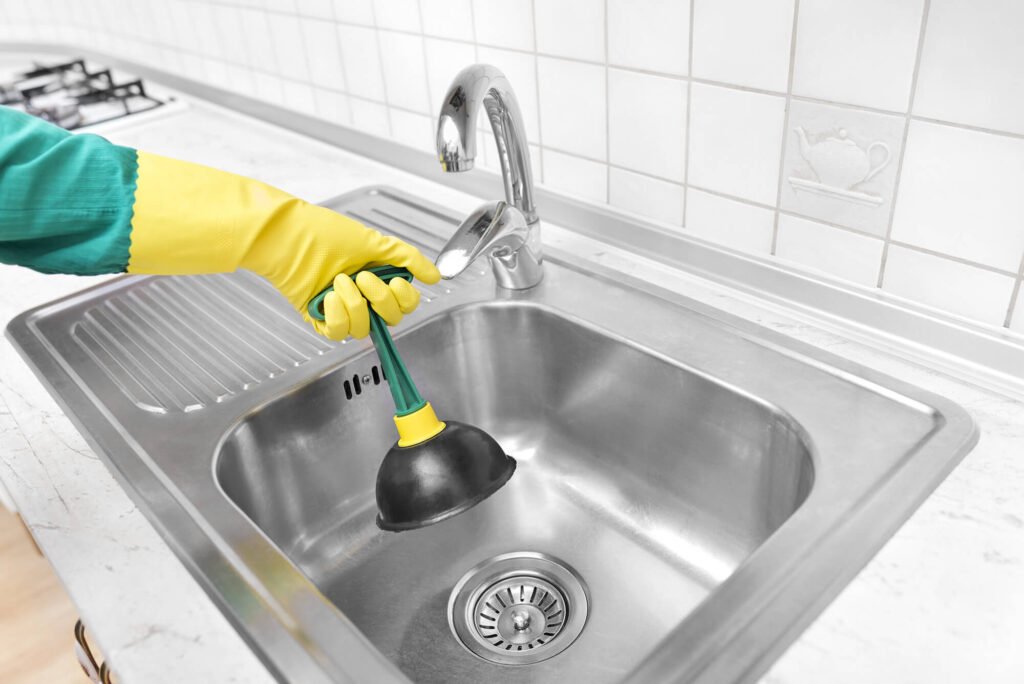
Method 2: The Plunger (Yes, Really — Technique Matters)
Most people plunge wrong, which is why they think plungers don't work.
- Seal the overflow. Bathroom sinks and tubs have an overflow hole — cover it with a wet rag. Without this seal, your plunging pressure just escapes out the overflow.
- Add enough water to cover the plunger's cup. A plunger needs water, not air, to create pressure.
- Push down gently first to get a seal, then plunge vigorously up and down for 20–30 seconds.
- Pull the plunger away sharply on the last stroke — that pop is what dislodges the clog.
- Run hot water for a minute to flush everything through.
Use a cup plunger (the classic dome shape) for sinks and tubs — the flange type with the extra flap is for toilets.
Method 3: The Drain Snake / Hair Removal Tool
If the clog is hair — and in bathroom drains, it almost always is — nothing beats physically pulling it out.
- Plastic hair snakes (the cheap barbed strips) cost almost nothing and slide right past the drain cover. Push in, twist, pull out slowly. The hairball that emerges will horrify and delight you in equal measure.
- A metal drain auger (hand-crank snake) reaches deeper clogs, 15–25 feet down. Feed it in slowly, crank when you feel resistance, then retract.
Do this every few months as maintenance. A $5 plastic snake has prevented more plumber visits in my house than any other tool I own.
Method 4: Remove and Clean the Stopper
Sometimes the "clog" is just buildup on the drain stopper itself.
- Lift or unscrew the stopper (most bathroom sink stoppers lift straight out or unscrew with a quarter turn).
- You'll likely find hair, soap, and mystery slime wrapped around it. Remove it all — gloves recommended.
- Scrub the stopper with an old toothbrush and dish soap.
- Before replacing it, shine a flashlight down the drain and fish out anything visible with tweezers or the plastic snake.
- Reinstall and test.
This five-minute job fixes a shocking number of "slow drains" by itself.
Method 5: The Salt + Baking Soda Overnight Treatment
For stubborn, greasy kitchen clogs:
- Mix 1/2 cup salt with 1/2 cup baking soda.
- Pour the mixture down the drain.
- Follow with a kettle of boiling water.
- Leave it overnight — don't run water for 6–8 hours.
- Flush with hot water in the morning.
The salt acts as a mild abrasive while the baking soda works on grease; the overnight sit is what beats stubborn clogs.
When to Stop DIYing and Call a Plumber
Natural methods handle 90% of clogs. Call a professional when:
- Multiple drains are slow at once — that signals a main line issue, not a local clog
- Water backs up in weird places (flush the toilet and the tub gurgles) — same reason
- You've tried everything twice and it's still slow — there may be a solid obstruction or pipe damage
- There's a sewage smell that won't go away — don't mess around with sewer gas
- You have a septic system and the problem is widespread — septic issues need professional diagnosis
There's no shame in calling a plumber — the shame is pouring a third bottle of chemicals down a drain that's telling you something bigger is wrong.
The Bottom Line
To unclog a drain naturally, start with baking soda + vinegar, escalate to proper plunging technique, then physically remove the clog with a cheap drain snake. These three methods clear the vast majority of household clogs without a single harsh chemical — saving your pipes, your wallet, and the water supply downstream. And put hair catchers on every drain today. Future you says thanks.
FAQ
Q: Can I use Coca-Cola to unclog a drain?
Cola is mildly acidic and can help with very light buildup, but it's far less effective than baking soda + vinegar — and leaves sticky sugar residue. Skip the soda.
Q: How often should I clean my drains to prevent clogs?
A monthly baking soda + vinegar flush plus a hair-catcher over every shower and tub drain will prevent the vast majority of clogs. Hair catchers (those cheap silicone discs) are the single highest-ROI purchase in all of home maintenance.
Q: Is it safe to use boiling water in all drains?
Boiling water is fine for metal pipes and modern PVC; for very old plastic pipes, stick with very hot tap water. When in doubt, hot tap water still works — just a little slower.