

Last updated: October 27, 2026
Heatless curls promise the dream: bouncy curls with zero heat damage. The internet is full of tutorials, but let's be honest — half of them fall flat (literally) by noon. I've tested the popular methods over the years, and the difference between curls that last and curls that don't usually comes down to technique, not the method itself.
Here's my honest ranking of five methods — plus what actually makes them work.
Before You Start: The Rules That Matter
Whichever method you pick, these fundamentals decide your results:
- Start with damp, not wet hair. About 80% dry is the sweet spot. Soaking wet hair won't set; bone-dry hair won't hold.
- Use a light styling product. A pea-sized amount of mousse, curl cream, or light gel gives the curls something to hold onto. Skip heavy oils before setting — they weigh curls down. Healthy hair holds curls better, so a weekly DIY hair mask is worth the ten minutes.
- Don't unravel too early. A full night (or at least 6–8 hours) — impatience is the #1 curl killer.
- Separate, don't brush. When you take the curls out, separate them gently with your fingers. A brush turns defined curls into a frizz halo.
#1: The Robe Belt / Heatless Curling Rod (Most Reliable)
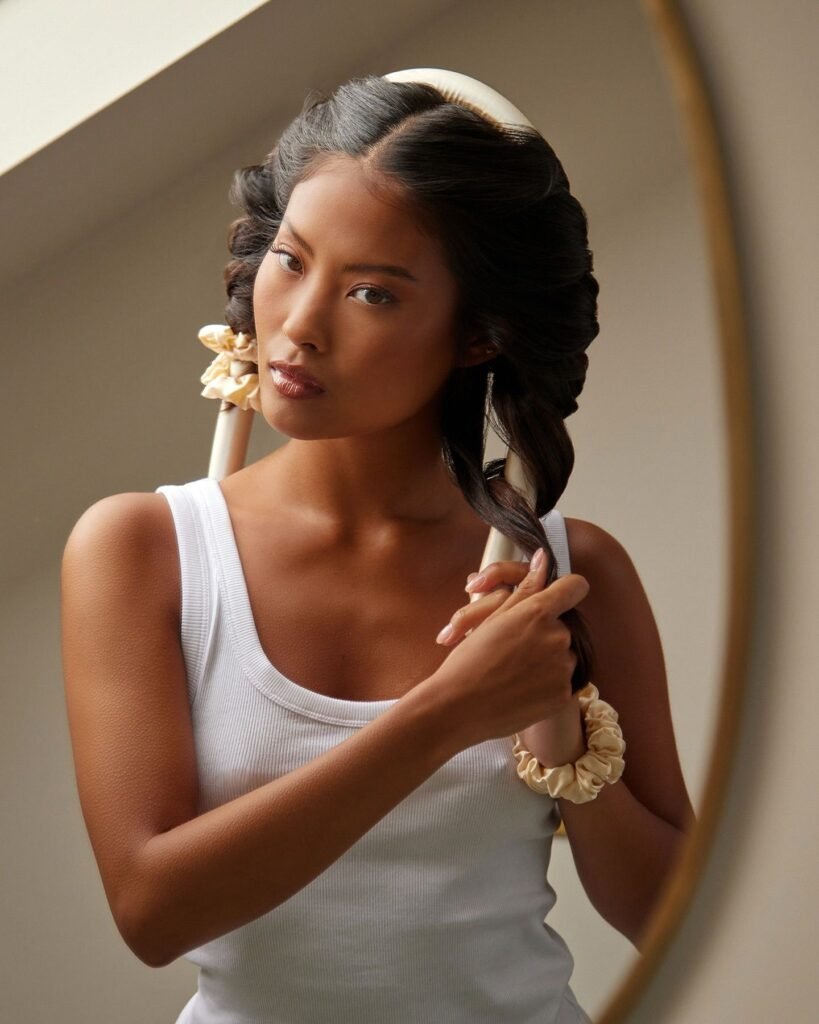
The viral robe-belt method earned its fame. You wrap sections of damp hair around a long, soft rod (or an actual bathrobe belt), sleep on it, and wake up to uniform waves.
Why it works: the long wrap creates consistent tension along the whole hair shaft, which is what forms a lasting curl pattern. It also keeps hair contained overnight, so there's less frizz from tossing around.
Best for: medium to long hair, all textures. Fine hair gets volume; thick hair gets tamed.
The trick most tutorials skip: wrap away from your face on both sides, and secure the ends properly — loose ends unravel by 2 a.m. A scrunchie at each end, not too tight.
Hold: excellent. Usually lasts all day, sometimes into day two.
#2: Braids (Easiest, Most Forgiving)
The method we all did as kids still works. Damp hair, a few braids, sleep, done.
Why it works: braiding creates a consistent wave pattern with almost zero skill required. Two loose braids give soft beach waves; four to six tighter braids give more defined texture.
Best for: beginners, thick or wavy hair that already holds texture well.
The trick: don't braid too tight — tight braids give crimped 2005 vibes instead of soft waves. For a natural look, braid from mid-shaft down and leave roots smooth.
Hold: good. Softer and more relaxed than the rod method, which many people actually prefer for everyday wear.
#3: Sock Curls (Best for Tight Curls)
Wrap sections of hair around soft socks (yes, really), tie or tuck the ends, sleep.
Why it works: each sock acts like a fat roller, and you can control the curl size by how much hair goes on each sock. Fewer socks = looser waves; more socks = tighter curls.
Best for: short to medium hair, and anyone who wants actual curls rather than waves.
Hold: very good for curl definition, though the top/roots can fall flat — tease the crown lightly after unraveling if you need lift.
#4: Twist Buns / Space Buns (Best for Volume)
Divide damp hair into sections, twist each into a small bun, secure, sleep.
Why it works: the twist creates spiral texture while the bun shape adds root volume. You wake up with big, voluminous waves.
Best for: fine or flat hair that needs body. Also great if you toss and turn — buns stay put better than almost anything.
The trick: two buns give balanced waves; one top bun gives more crown volume but flatter sides. Use soft scrunchies — tight elastics leave dents that ruin the effect.
Hold: moderate. Big and beautiful in the morning, softens by afternoon. A light mist of flexible-hold hairspray extends it.
#5: Headband / Scarf Wrapping (Gentlest Option)
Loop damp sections of hair around a soft headband worn hippie-style around your head. Sleep, remove.
Why it works: it's the gentlest method here — no pulling, no tight wrapping, minimal tension. Good for fragile or damaged hair.
Best for: delicate, damaged, or very fine hair that can't handle tighter methods.
The trick: use slightly damper hair and a little extra product, since the loose wrap sets slowly. Don't expect tight curls — expect soft, romantic waves.
Hold: the lightest of the five. Lovely for a few hours; plan a refresh with a curling touch-up or embrace the lived-in wave.
Mistakes That Ruin Heatless Curls
- Starting with wet hair. It won't dry overnight wrapped up, and you'll wake up to damp, limp strands. Damp is the target.
- Skipping product. Bare hair has nothing to "remember" the shape. Even a tiny amount of mousse changes everything.
- Unwrapping too early. Six hours minimum, overnight ideally. Every hour you cut short costs you hold time later.
- Brushing them out. Fingers only. A brush is how defined curls become one big triangle of frizz.
- Sleeping on cotton. A satin or silk pillowcase (or a loose satin bonnet) dramatically reduces frizz for every method here.
The Bottom Line
Heatless curls genuinely work — the robe-belt rod for reliability, braids for ease, socks for definition, twist buns for volume, and headband wrapping for the gentlest option. The secret was never the method; it's damp hair, a little product, enough time, and fingers instead of a brush. Your hair (and your electricity bill) will thank you.
FAQ
Q: How do I make heatless curls last longer?
Three things: product before setting, full setting time (overnight), and a light flexible-hold hairspray after unraveling. Also, second-day hair actually holds curls better than freshly washed hair — the natural oils give grip.
Q: Can I do heatless curls on short hair?
Absolutely. Sock curls and small twist buns work great on bobs and lobs. The robe-belt method needs enough length to wrap, so it's better for shoulder-length and longer. For pixie cuts, try small pin curls instead.
Q: Will heatless curls damage my hair?
Far less than heat styling, but they're not zero-impact. Tight wrapping, rough fabrics, and yanking out tangles can cause breakage. Keep tension comfortable, use soft materials, and be gentle when unwrapping — that's 95% of damage prevention. Already dealing with damage? Here's how to fix damaged hair without cutting it.